
enne📚 reviewed Brilliant Imperfection
4 stars
Giving this book a much needed reread after Aleums mentioned it again recently in a conversation about resources for coming to terms with a disability.
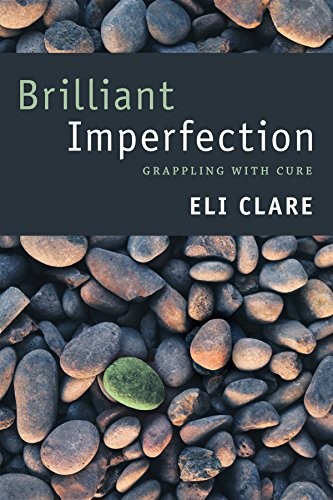
Brilliant Imperfections is a nonfiction book about disability, intersections with race and gender and colonialism, and about their complicated relations to "diagnosis" and "cure". In the introduction, the author describes this book as a mosaic, and I think there's no better word. There's historical digressions, personal interludes, and the book wanders around constructing a larger composition through smaller conflicting pieces.
The author argues against himself messily in ways that don't lead to easy answers. Many messy thoughts sit uneasily and challenge my own feelings, in a way that I deeply appreciate. Here's some of the messiness the book gets into:
- that diagnosis is both a tool of access, self-knowledge, and also a weapon that can be used against us
- …
Giving this book a much needed reread after Aleums mentioned it again recently in a conversation about resources for coming to terms with a disability.
Brilliant Imperfections is a nonfiction book about disability, intersections with race and gender and colonialism, and about their complicated relations to "diagnosis" and "cure". In the introduction, the author describes this book as a mosaic, and I think there's no better word. There's historical digressions, personal interludes, and the book wanders around constructing a larger composition through smaller conflicting pieces.
The author argues against himself messily in ways that don't lead to easy answers. Many messy thoughts sit uneasily and challenge my own feelings, in a way that I deeply appreciate. Here's some of the messiness the book gets into:
- that diagnosis is both a tool of access, self-knowledge, and also a weapon that can be used against us
- resisting the notion that our bodies are broken and wrong while simultaneously feeling that some pain still feels unhealthy and cries out for treatment and mitigation
- (or said differently, that eliminating systemic social barriers is not sufficient for every body, even as it remains necessary)
- trying to disentangle the differences between "I love my disabled body and don't want to change it" to "changing my body in trans ways gives me euphoria" (or in transabled ways)
- opposing corporations dumping chemicals that cause birth "defects" while simultaneously not erasing those folks or saying they shouldn't exist
Talk to anyone who does restoration work— carpenters who rebuild 150-year-old neglected houses or conservation biologists who turn agribusiness cornfields back to tallgrass prairie— and they’ll say it’s a complex undertaking. A fluid, responsive process, restoration requires digging into the past, stretching toward the future, working hard in the present. And the end results rarely, if ever, match the original state.
For somebody continually coming to terms with my own chronic pain (and an aging body), the part of the book that resonates the most with me is this metaphor of restoration. That a desire for "cure" is a desire for time travel, back to a previous state when things were "unbroken" and "right", but also one that is similarly impossible to get to. But I think it's also a recognition of how much of a complex ecosystem our bodies are.
I’ve had lovers tell me how good my shaky touch feels, tremors likened to extra caresses or driving over a gravel road, their words an antidote to shame. But until now, I had never felt the pleasure they describe. Your twitches spread across my skin—tingle, echo, dance.
The other parts of the book that stick with me are the many personal asides in which the author finds joy in his own body and experiences. The way they recognize the different perspectives and ways they have been shaped that make them them. The way his friend says, "I am so glad you were born crippled".