5 stars
Honesto e intrigante. 👍
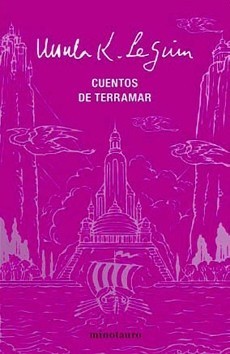
Spanish language
Published Nov. 22, 2014 by Minotauro.
In this final episode of "The Earthsea Cycle", the widowed Tenar finds and nurses her aging friend, Sparrowhawk, a magician who has lost his powers.
Honesto e intrigante. 👍
This collection of stories introduces some good new characters and adds some backstory for others and their teachers, but really it's Earthsea itself that gets fleshed out, and particularly the magic school at Roke. The stories cover a range from the foundation of that school through a sort of coming-of-age tale about Ged's teacher Ogion, on to the immediate aftermath of the previous book, Tehanu.
I didn't find the end of the last story satisfying, but Le Guin described it elsewhere as a bridge to the final book, so perhaps it's just intentionally so. I'll certainly be coming back to Earthsea sooner or later--I seem to read about one of these books a year--so I will find out.
Content warning some spoilers about the end
This book was both heartbreaking and heartwarming. It was heartbreaking because there is a constant violence against the poor little girl, and she seems to suffer so much. But then things turn to a positive outcome at the end, and she speaks to Kalessin and calls Ged and Tenar her father and mother (when there where just hints of Tenar thinking of her as "adoptive daughter"). I was feeling joy while reading those pages. At the fourth book in the series, I think I see a kind of tidal cycle between male- and female-focused stories. Books 1 and 3 were pretty much male-focused and books 2 and 4 are strongly female-focused. It's explicit, the Place of the Tombs of Atuan has no men, only eunuchs. In "Tehanu" the female perspective is weaved in almost every page, both in the grand scheme of things and the everyday life. I couldn't help noticing a Christian analogy for the final scene when Kalessin says that Tehanu is their daughter, given to Ged and Tenar who should care for her - but it's Tehanu who chooses to stay and help them. So it's actually a radically different approach than the Christian God.